

Cart
0
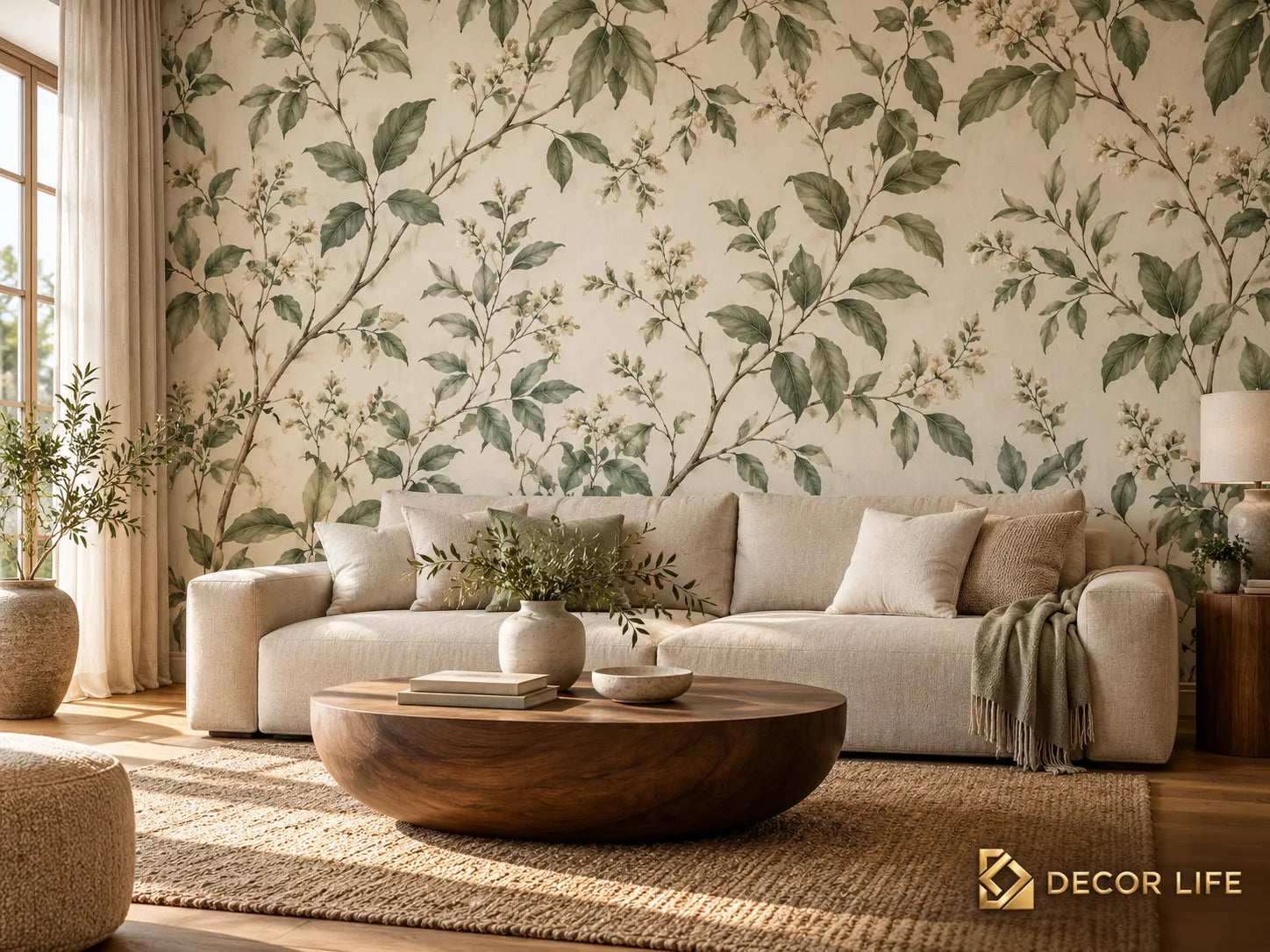
The best wallpaper for living room walls is one that works with your furniture, lighting and daily routine. Start with the wall you want to decorate, choose colours already present in the room, and check the material and measurements before ordering. A beautiful print is only part of a good decision.
Perhaps your sofa and curtains already work well together, but the wall behind them feels unfinished. Or you like a dramatic mural online and wonder whether it will overwhelm your apartment. This guide helps you make those choices without replacing everything you own.
Which living room wall should you wallpaper?
Choose a wall that gives the design enough visible space. The wall behind the main sofa is often a useful starting point because it connects the wallpaper to the seating area.
Before deciding, stand at the room entrance and then sit in your usual seat. Notice which wall draws your attention and how much of it furniture covers. A detailed scene loses its impact if a tall cabinet hides its main feature.
A television wall needs a different approach. If you prefer a quiet background while watching, consider a low-contrast pattern or subtle texture effect. Keep stronger prints for a wall where you actually want attention to linger.
Wallpapering all four walls can also work. Try a restrained pattern if the room already contains patterned curtains, an ornate rug or plenty of artwork.
How do you choose colours that work with your furniture?
Start with the pieces you intend to keep. Replacing wallpaper is one decision; discovering that it clashes with your favourite sofa creates several more.
Pick out two or three existing colours from your upholstery, flooring, curtains or cushions. Use one as a connection to the wallpaper. The shades do not need to match exactly, but they should feel comfortable together.
For example, a beige sofa and wooden coffee table could work with a cream background and muted green leaves. With a charcoal sofa, try comparing a warm neutral design against a cooler grey option before choosing.
If samples are available, view one beside your furniture in daylight and under your evening lights. Hold it vertically against the intended wall. A photograph viewed on a bright phone screen cannot reliably show how that colour will feel at home.
Which wallpaper designs suit different living rooms?
Think about the atmosphere you want before narrowing down the pattern. These are starting points, rather than rules every room must follow.
| Your room or preference | Design to consider | What to check |
|---|---|---|
| A busy room with patterned furnishings | Gentle texture effect or low-contrast print | Whether it competes with existing patterns |
| A relaxed, nature-inspired space | Botanical or floral wallpaper | Leaf or flower size beside the sofa |
| A simple room needing one focal point | Landscape mural or expressive abstract | Where the main image sits after cropping |
| A traditional seating area | Decorative panels or restrained damask | Alignment with furniture and wall proportions |
| A compact room | Open pattern with a quiet background | How it looks from your normal viewing distance |
Floral wallpaper for walls can feel delicate or dramatic depending on scale and contrast. A scattered branch pattern creates a different effect from tightly packed, oversized flowers.
When comparing luxury wallpaper designs, look beyond metallic details or elaborate prints. Ask what the material feels like, how the design joins across panels, and what preparation the wall requires.
Can you use a large pattern in a small living room?
Yes. A small room does not automatically need a tiny print. A larger motif with space around it may feel calmer than a dense pattern repeated across every wall.
Imagine two options behind a compact sofa: a pale botanical design with a few broad leaves, and a tightly packed geometric print. The first might be easier to live with even though its individual shapes are larger.
Compare the design at room scale. Ask for the repeat dimensions or mural layout, then use removable paper templates to understand the approximate size on your wall. Keep nearby furnishings simple if you want the wallpaper to be the main feature.
What should you check about the material?
The product specification matters more than a broad promise such as “easy maintenance.” Confirm the installation method, suitable wall surface and cleaning instructions for the exact wallpaper you are buying.
Do not assume that every wallpaper can be wiped with a wet cloth. Follow its care label, and ask the seller to explain unfamiliar cleaning symbols. Likewise, confirm what “removable” means for the product and your existing paint finish.
Wall preparation deserves equal attention. The surface should be sound, smooth, clean and dry. Repair loose paint and surface defects, and deal with the cause of dampness before decorating. Follow the specified primer, adhesive and drying instructions rather than treating wallpaper as a cover for an unresolved wall problem. [1]
How do you measure and budget for wallpaper?
Measure each wall separately, recording width and height in the same units. For a basic area calculation:
Wall area = width × height
A wall measuring 12 feet wide and 9 feet high has an area of 108 square feet. This is its surface area, not a confirmed order quantity.
For roll wallpaper, pattern matching and usable strip lengths affect how many rolls you need. Give the seller your measurements and the exact design so they can check the quantity. Do not rely only on dividing the wall area by the area printed on a roll label. [2]
For a mural, confirm the final width, height, panel order, trimming allowance and image crop before approving it. Check whether the sofa will hide an important part of the scene.
When comparing quotes, include the wallpaper, wall preparation, adhesive, installation, delivery and any applicable taxes. Ask which items are included. A lower material price may not mean a lower finished cost.
Mistakes worth avoiding before you order
Buying from one styled photograph is an easy mistake. The pictured room may have a higher ceiling, brighter lighting and much less furniture than yours.
Another is choosing too many competing focal points. If the wallpaper is expressive, give it some space by simplifying nearby artwork or accessories. You can still use colour elsewhere without repeating a strong pattern on every surface.
Finally, check the installation and return terms before paying, particularly for made-to-measure products. Confirm measurements and design details in writing so everyone is working from the same information.
Frequently asked questions
Is wallpaper better than paint for a living room?
Wallpaper suits rooms where you want a repeat pattern, illustrated scene or decorative detail. Paint works well for a simple colour finish. A wallpaper feature wall with painted surrounding walls lets you combine both approaches.
Should wallpaper match the curtains?
It helps to share a colour or an undertone, but identical patterns are unnecessary. If your curtains already have a strong print, try a quieter wallpaper. With plain curtains, you have more freedom to introduce pattern on the wall.
What is the difference between wallpaper and a wall mural?
Wallpaper commonly repeats a pattern across strips. A wall mural usually forms one larger composition across ordered panels. Check the product format: mural placement and cropping matter because moving one panel can interrupt the overall image.
Can wallpaper hide a damaged wall?
It should not be used to conceal dampness, loose plaster or peeling paint. Repair the underlying issue first. Even where a textured finish makes minor unevenness less noticeable, the wall still needs the preparation required by the product.
How do I clean living room wallpaper?
Use the cleaning method stated for that product. Avoid assuming that washable, spongeable and scrubbable mean the same thing. Check with the supplier before applying water, detergent or pressure to an unfamiliar finish.
Make your shortlist with Decors Life
When choosing wallpaper for living room walls from Decors Life, keep a photograph of your room, wall measurements and furniture colours beside you. Compare a few designs against those details instead of browsing without a clear starting point.
Before ordering, ask about the selected design’s material, dimensions, care requirements and installation method. The aim is a wall you enjoy looking at every day, with a finish that suits how you use the room.


